Thailand BCG Economy Model
Thailand’s BCG (Bio-Circular-Green) Economy Model is a national strategy to drive the country toward sustainable development. It integrates three key economic approaches: Bioeconomy, Circular Economy, and Green Economy. The model emphasizes the use of innovation to add value to agricultural products and natural resources, reduce waste, minimize environmental impacts, and elevate Thailand to a high-income nation in line with the Thailand 4.0 policy.
The Three Pillars of the BCG Model including (1) Bioeconomy: The application of knowledge, technology, and innovation to upgrade agricultural production and biological resources into high-value products such as functional foods, cosmeceuticals, biopharmaceuticals, and biofuels, (2) Circular Economy: Maximizing resource efficiency by reusing and upcycling waste materials under a zero-waste concept to reduce waste generation and environmental impact, and (3) Green Economy: Environmentally friendly production and services that promote economic growth while maintaining ecological balance and addressing climate change.
Main Goals of the BCG Strategy (1) Wealth Creation – Increase the GDP contribution of the BCG economy to 4.4 trillion baht and triple the value of agricultural products, (2) Reducing Inequality – Distribute income to local communities with a target of increasing farmers’ income to 240,000 baht per household per year, (3) Sustainability – Reduce resource consumption to two-thirds of current levels and decrease waste by 16.5 million tons.
Four Priority Sectors: a. Agriculture and Food, b. Health and Medicine, c. Energy, Materials, and Biochemicals, and d) Tourism and the Creative Economy. The BCG Model is aligned with Thailand’s Sufficiency Economy Philosophy and the United Nations Sustainable Development Goals (SDGs).
More information: https://www.bcg.in.th/eng/background/
Partnership – Wongphai (Biochar)
Wongphai is a Thailand-based sustainability enterprise founded around 2020–2021 with the aim of tackling climate change while strengthening rural economies. The company was established by Thai entrepreneurs who saw the environmental damage caused by agricultural waste burning and the missed opportunity to create value from abundant bamboo residues. Wongphai’s core mission is to convert bamboo offcuts and other agricultural waste into biochar, a stable carbon material that improves soil health and permanently stores carbon in the ground, addressing both environmental and social challenges. Through this approach, the enterprise works at the intersection of carbon removal, sustainable agriculture, and community development, creating local jobs and supporting farmers with soil enhancement solutions that reduce reliance on chemical inputs. Wongphai also actively collaborates with multiple universities in Thailand on applied research and community projects, including partnerships that explore soil stabilization and biochar applications with institutions such as Kasetsart University and engagement in programs connected to Rajamangala University of Technology Thanyaburi (RMUTT), strengthening academic-industry ties in sustainability innovation.
Operationally, Wongphai works with local farming communities to collect biomass, produce biochar through controlled pyrolysis, and apply it back to agricultural land such as rice fields and cassava farms. The enterprise also integrates digital monitoring and verification systems in partnership with climate-tech organizations to ensure transparent measurement of carbon removal benefits. Its work has received international attention within the biochar and climate solution sectors, including independent assessments of its carbon removal potential and participation in sustainability and biodiversity forums such as the UNDP BIOFIN programme in Bangkok. At the national level, Wongphai contributes to reducing open-field burning and promoting regenerative agriculture, while globally it is recognized as part of the growing movement of nature-based carbon removal initiatives in Southeast Asia.
More information: https://planboo.eco/project/wongphai-biochar-project/
Partnership – Bangsean Heritage Hotel (Green Jobber & Circular Economy)
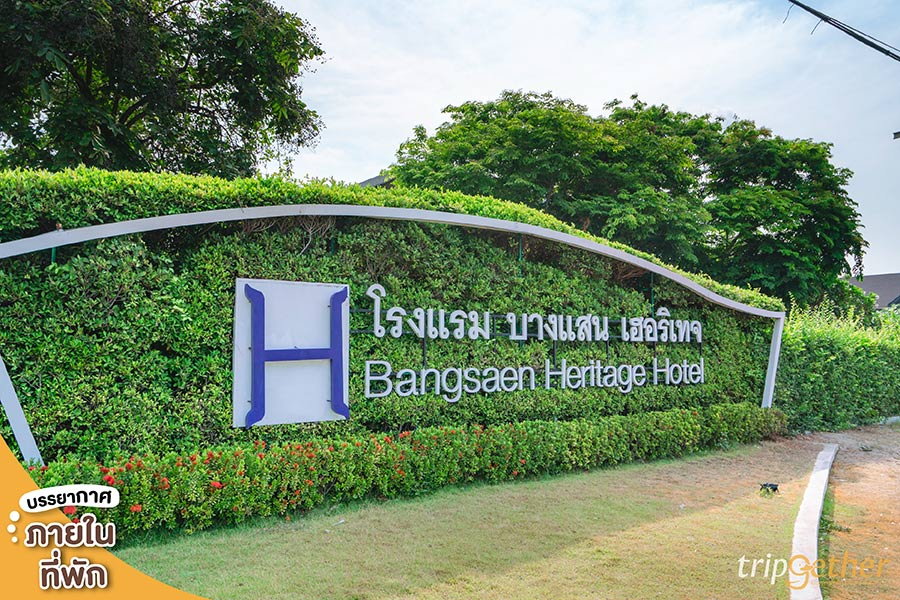
Commitment to a Greener Future “Recognizing the critical importance of environmental conservation and sustainable coexistence with the Bangsaen community, Bangsaen Heritage Hotel is dedicated to elevating our service standards to be environmentally friendly. We strictly focus on two core pillars as follows
<Effective Waste Management>
• Targeting Single-Use Plastic: Systematically transitioning from plastic to glass water bottles in guest rooms. Utilizing large, refillable dispensers for amenities to eliminate individual bottles. Reducing the use of plastic straws and Styrofoam containers.
• Waste Separation at Source: Implementing comprehensive waste separation with strategically placed color-coded bins for all areas. Conducting ongoing staff training to ensure correct separation of general, recyclable, and hazardous waste.
• Food Waste Management: Launching initiatives in buffet operations, focusing on precise production planning to minimize surplus and waste.
<Creating a Green Ecosystem & Resource Conservation>
• Green Area Enhancement: Actively preserving and increasing the count of large trees, dedicated to creating urban “lungs” for the community. Prioritizing native plant species in landscaping to optimize water and fertilizer use.
• Water & Energy Savings: Installing high-efficiency, low-flow water fixtures in all guest rooms. Converting all lighting to energy-efficient LEDs and using automated systems where appropriate.
• Guest Engagement: Actively promoting water and energy conservation through a voluntary, rewarding Linen Reuse Program for towels and sheets.
• Community Partnership: Formally supporting and participating in a regular, coordinated community beach cleanup program with the municipality and local members.
Official website: https://www.bs-heritagehotel.com/
Uncle Daeng Mellon & Lettuce Farm
Uncle Daeng Melon & Lettuce Farm is one of Pathum Thani’s best-known agritourism destinations. Managed by Mr. Phet (Weerapong Su-Osot), a new-generation Smart Farmer, the farm began with an investment of just over one hundred thousand baht. Within only four years, it had grown into a successful business generating millions of baht in annual revenue, inspiring many young people to return to their hometowns and pursue careers in modern agriculture.
The success of Uncle Daeng Melon & Lettuce Farm is built on four key strategies.
First, efficient water management. Half of the eight-rai property is dedicated to a reservoir capable of storing enough water for year-round farming, while the remaining four rai are used to cultivate melons, lettuce, and tomatoes. The farm uses mini-sprinkler and drip irrigation systems, recycling excess water back into the reservoir. By relying entirely on its own water supply, supplemented by annual rainfall, the farm has never experienced water shortages.
Second, smart farming technology. Supported by the Hydro-Informatics Institute, the farm has adopted solar energy, reducing electricity costs by approximately 50 percent. Automated irrigation and fertilization systems, along with sensors that monitor soil moisture, temperature, and humidity, help optimize crop production. Wireless sensor data is collected and analyzed to improve future cultivation, allowing the entire farm to be efficiently managed by only two workers.
Third, agritourism development. Visitors are invited to explore the melon greenhouses and fresh vegetable gardens, harvest fruit directly from the plants, and enjoy recreational activities such as boating and water cycling. The farm also features a café serving a variety of food and beverages prepared with fresh farm ingredients.
Finally, value-added processing. In addition to selling fresh produce, the farm transforms its harvest into premium products such as fresh melon smoothies, dried cherry tomatoes, mulberry jam, fresh mulberry juice, and mulberry smoothies. These value-added products create additional income and enhance the farm’s long-term sustainability.
Today, Uncle Daeng Melon & Lettuce Farm stands as an outstanding example of how innovation, resource management, and creativity can transform modern agriculture into a sustainable and profitable business.
More information: https://www.facebook.com/FarmLungDang/?locale=th_TH
RMUTT Go Green
Rajamangala University of Technology Thanyaburi (RMUTT) places strong emphasis on fostering environmental awareness and promoting a green society through the integration of sustainability concepts into its general education curriculum. All first- and second-year students are required to enroll in the course “Green University”, which is designed to provide both foundational knowledge and meaningful learning experiences that cultivate environmental consciousness. The course encourages students to develop a sense of responsibility toward environmental stewardship and to apply sustainable practices in their future professions as well as in their daily lives.
In addition, the program actively engages both academic and support staff, who participate in attending student project presentations and activity showcases. During the event, students present innovative projects and environmentally friendly inventions that reflect their learning outcomes and commitment to sustainability.
More information: https://www.eng.rmutt.ac.th/sdgs-activities/